Rain Circus
Community Culture
Activitiy • Installation
Rain Circus is an experimental system for the collection and storage of rainwater and the irrigation of a plot of educational vegetable gardens. It was developed in collaboration with the architectural practice HPO and was awarded a special honourable mention at the ‘Federico Maggia Prize 2022’, equivalent to Second Prize.
Biella • 2022
CLIENT
Politecnico di Milano
PUBLICATIONS
Casabella
AWARDS
Premio Maggia 2022
USEFUL LINKS
Premio Maggia 2022
HPO – RainCircus
PARTNERSHIPS
H-P-O Architecture
SPONSOR
Vira Solutions, Scarlatta Vivai
Premio Maggia
The organisers of the 2022 Maggia Prize assigned each finalist group a case study on which to carry out their project. Specifically, the group comprising Plam Studio and HPO was assigned the Cossila Primary School in Biella, with the challenge of designing a structure to support outdoor lessons.
The Context
During the first inspection, at Biella Cossila Primary School, and following discussions with teachers, the design team felt that the most significant critical issue to be addressed was the implementation of the school's teaching gardens and their water supply.
The only available water connection was 60 m from the growing area, thus unsuitable for optimal educational management.


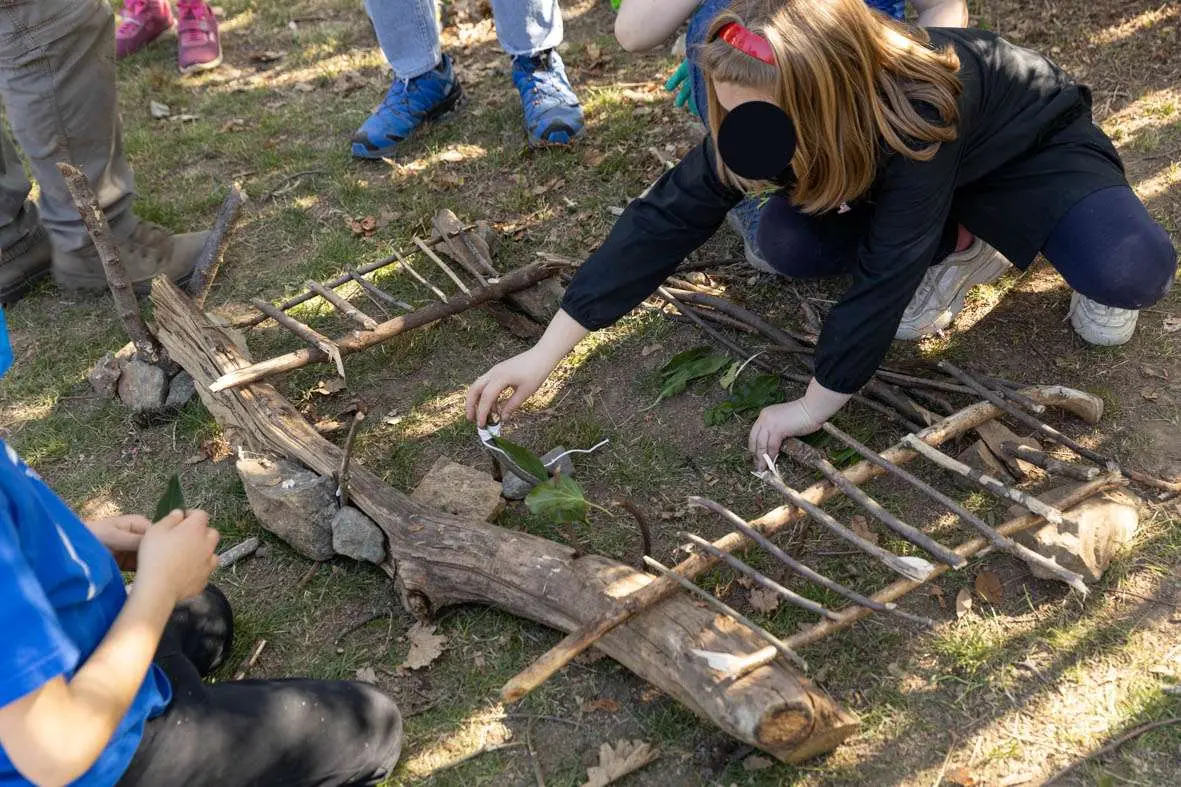

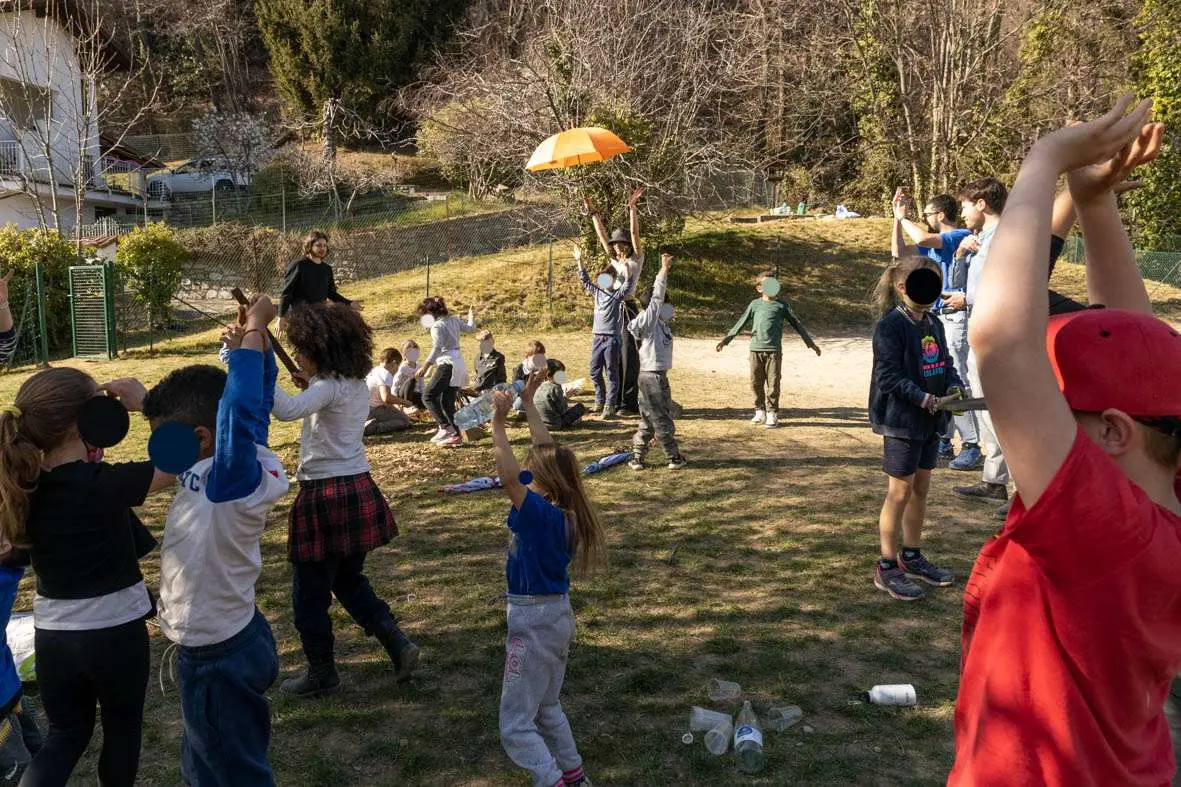

The workshop, “Affective Fields, Learning from the Land. Young designers fabricate knowledge spaces.”
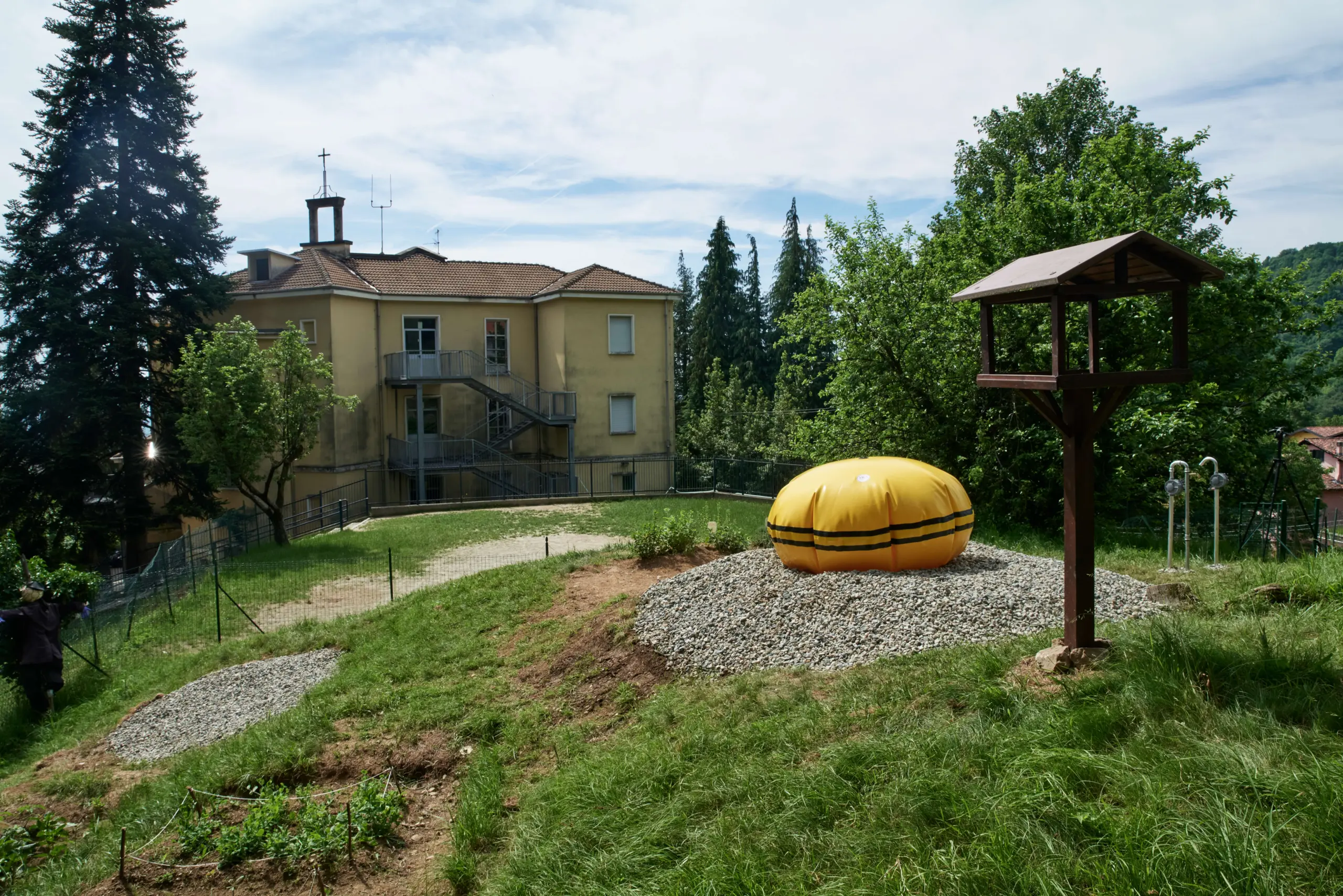
To gather stimuli from the community and involve them in the design process, a workshop was held in the presence of all members of the school community: teachers and students. During the design day, a strong suggestion emerged from the young pupils toward symbolic elements such as natural elements (fire and water), inter-speciesism (represented by the birdhouse placed near the vegetable gardens) and symbolic spatial themes such as the island, staircase and hut.
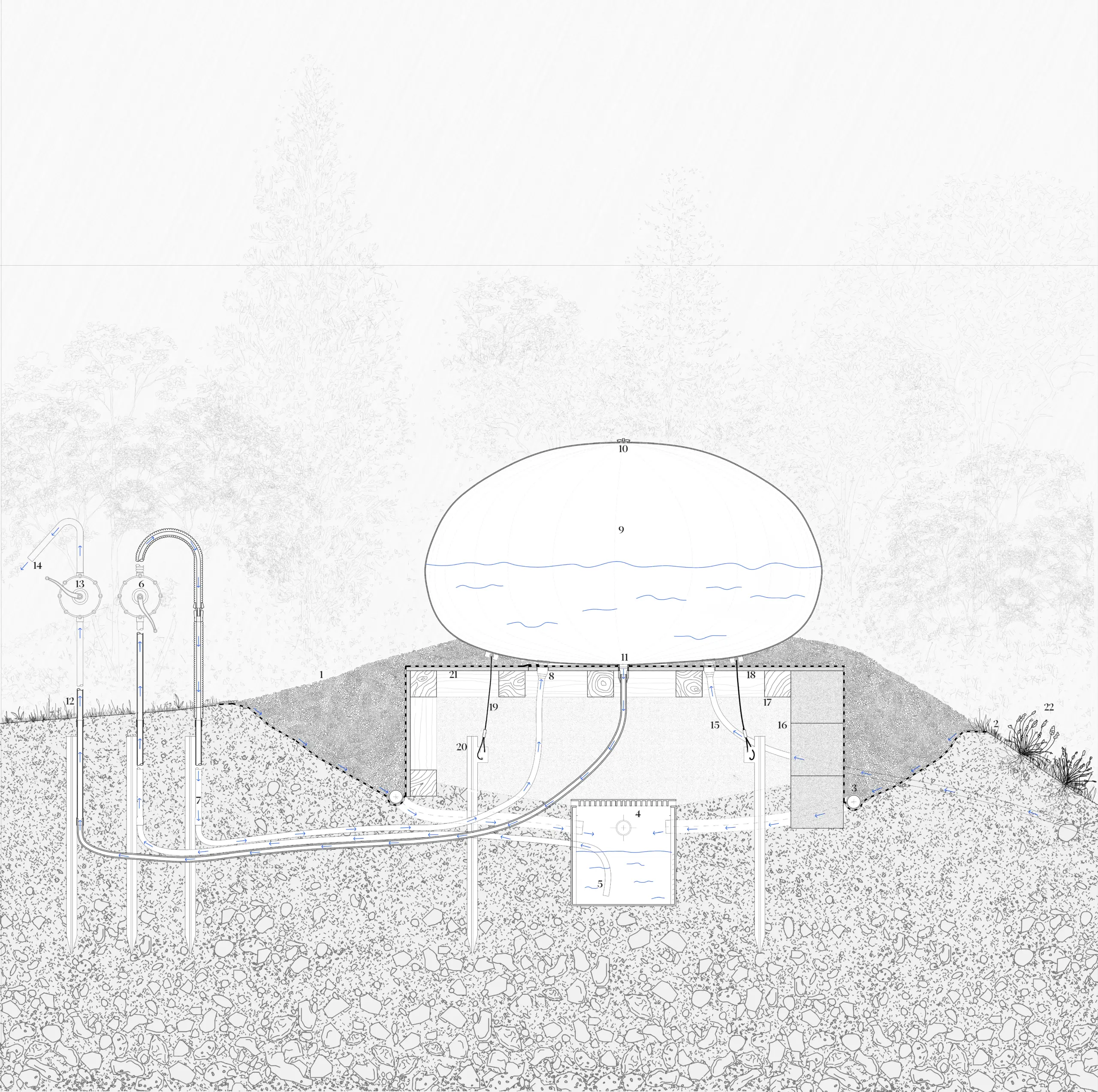
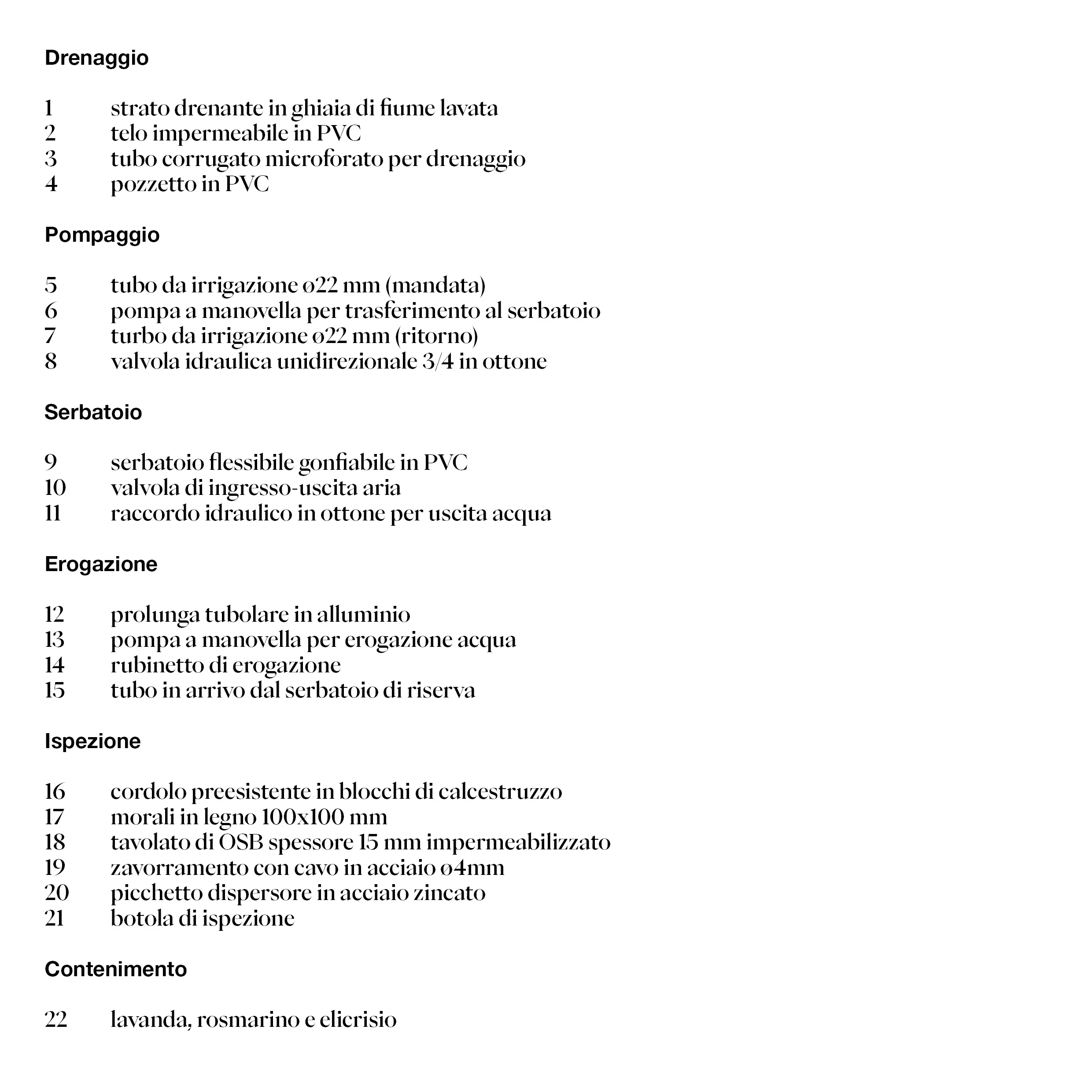
Rain Circus
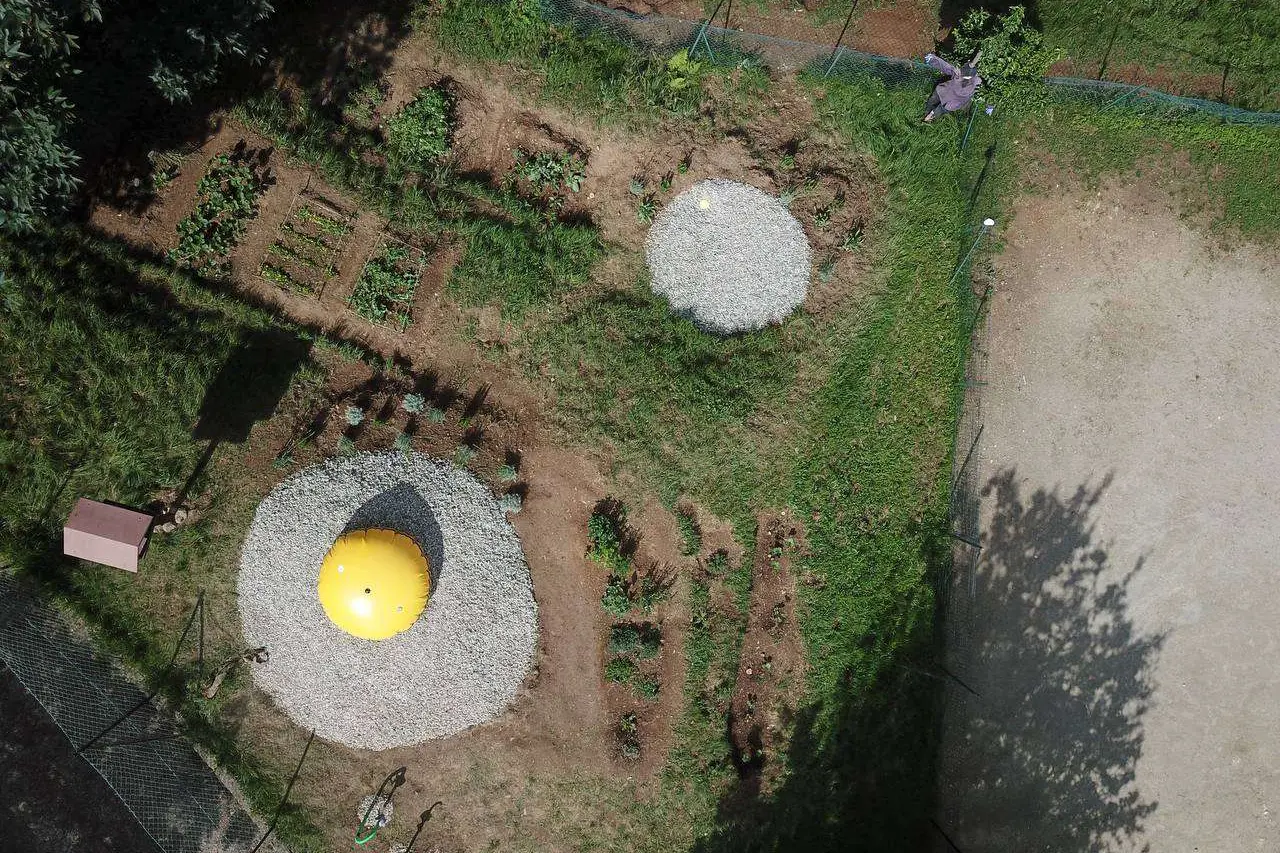
Not wanting to interfere in the configuration of the vegetable gardens, which the school teachers had already begun to prepare, the group focused on rainwater harvesting as a gesture with possible educational and symbolic outcomes, assigning this function to a representative device for the children.
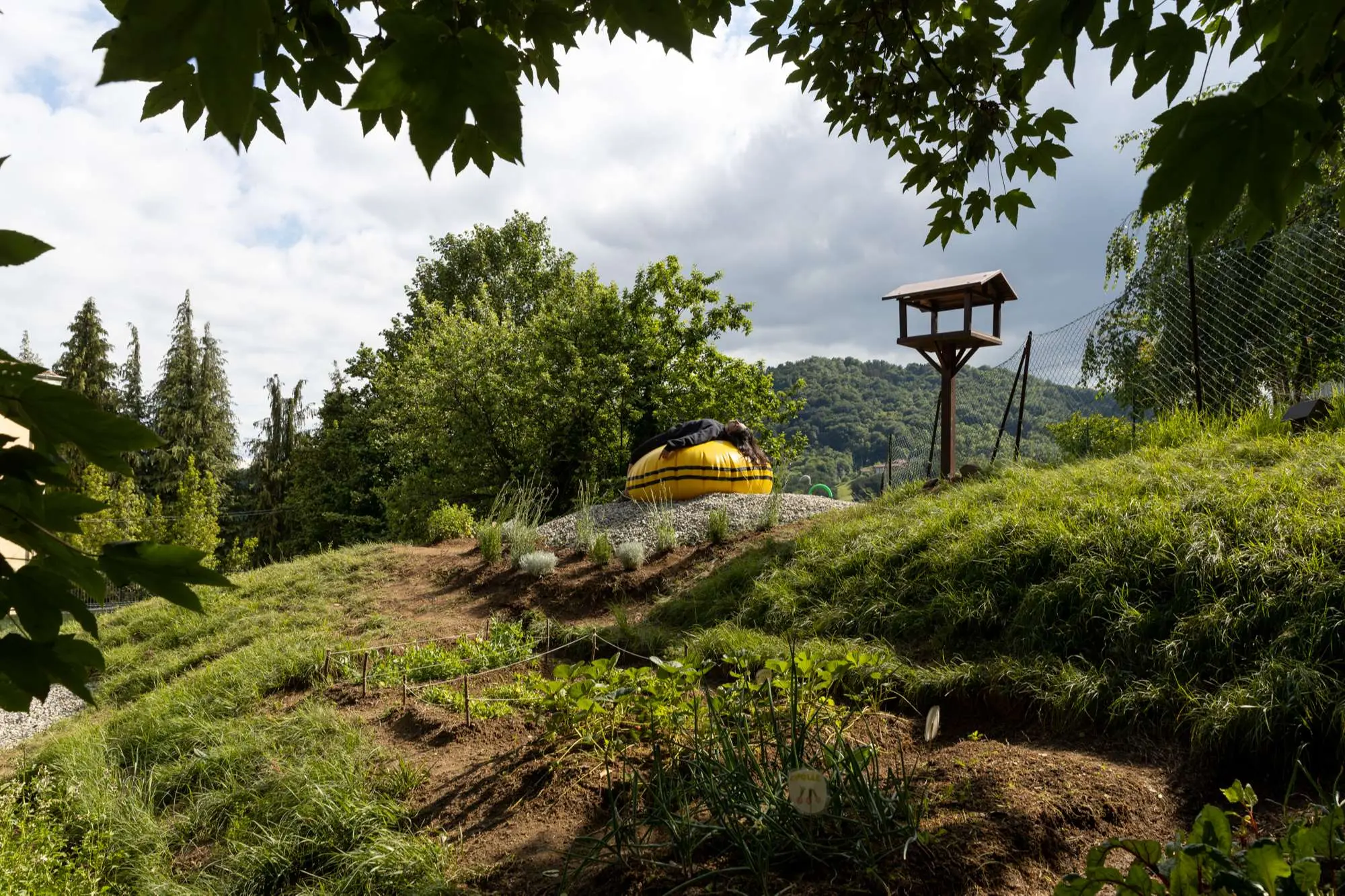
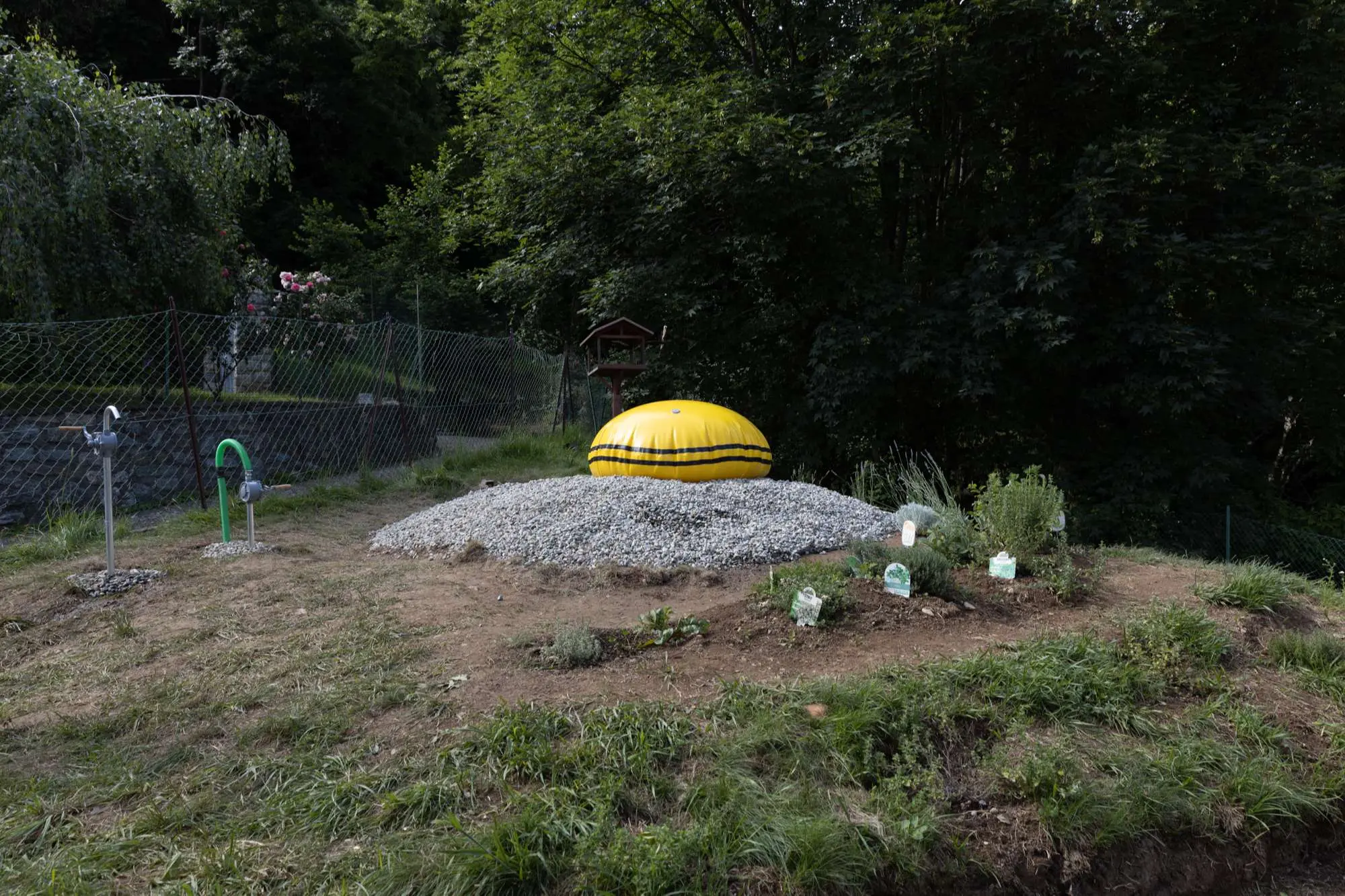
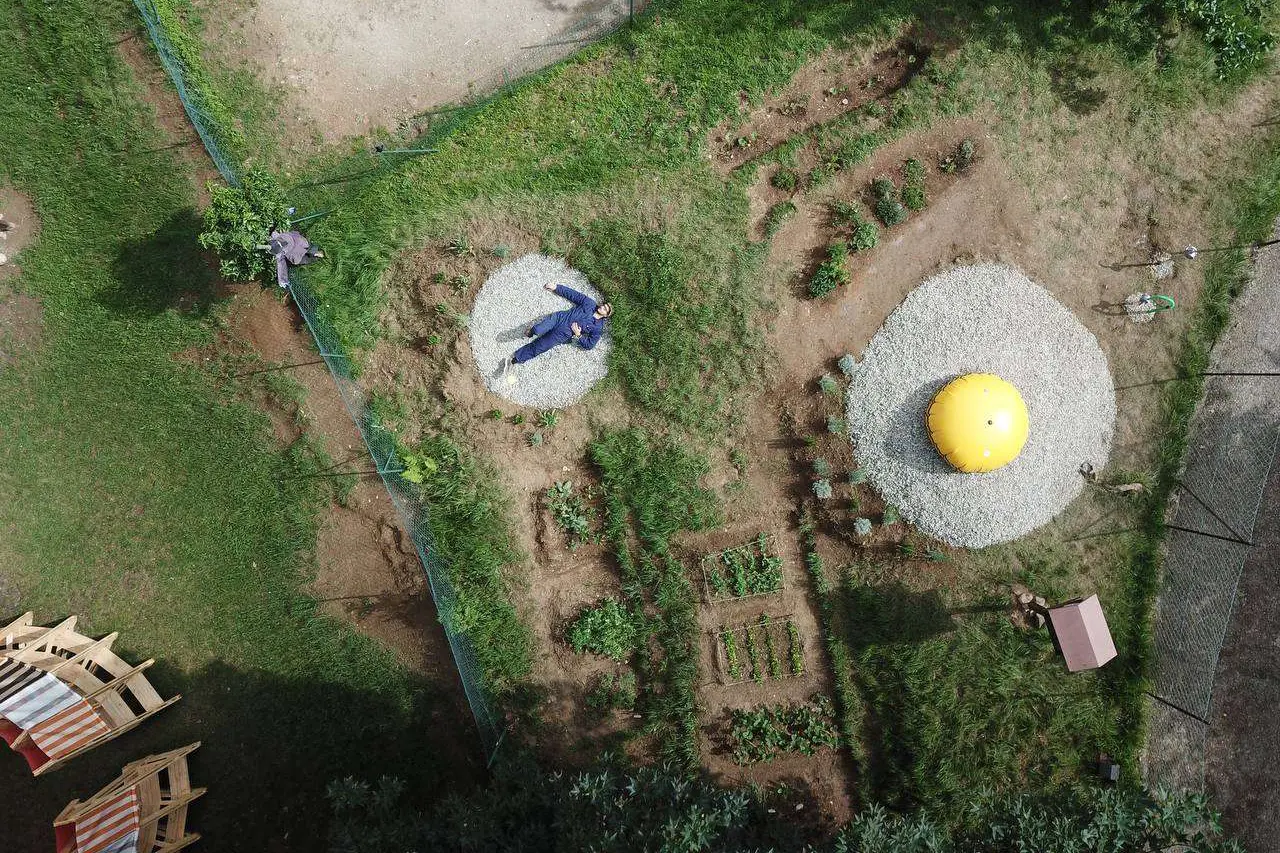
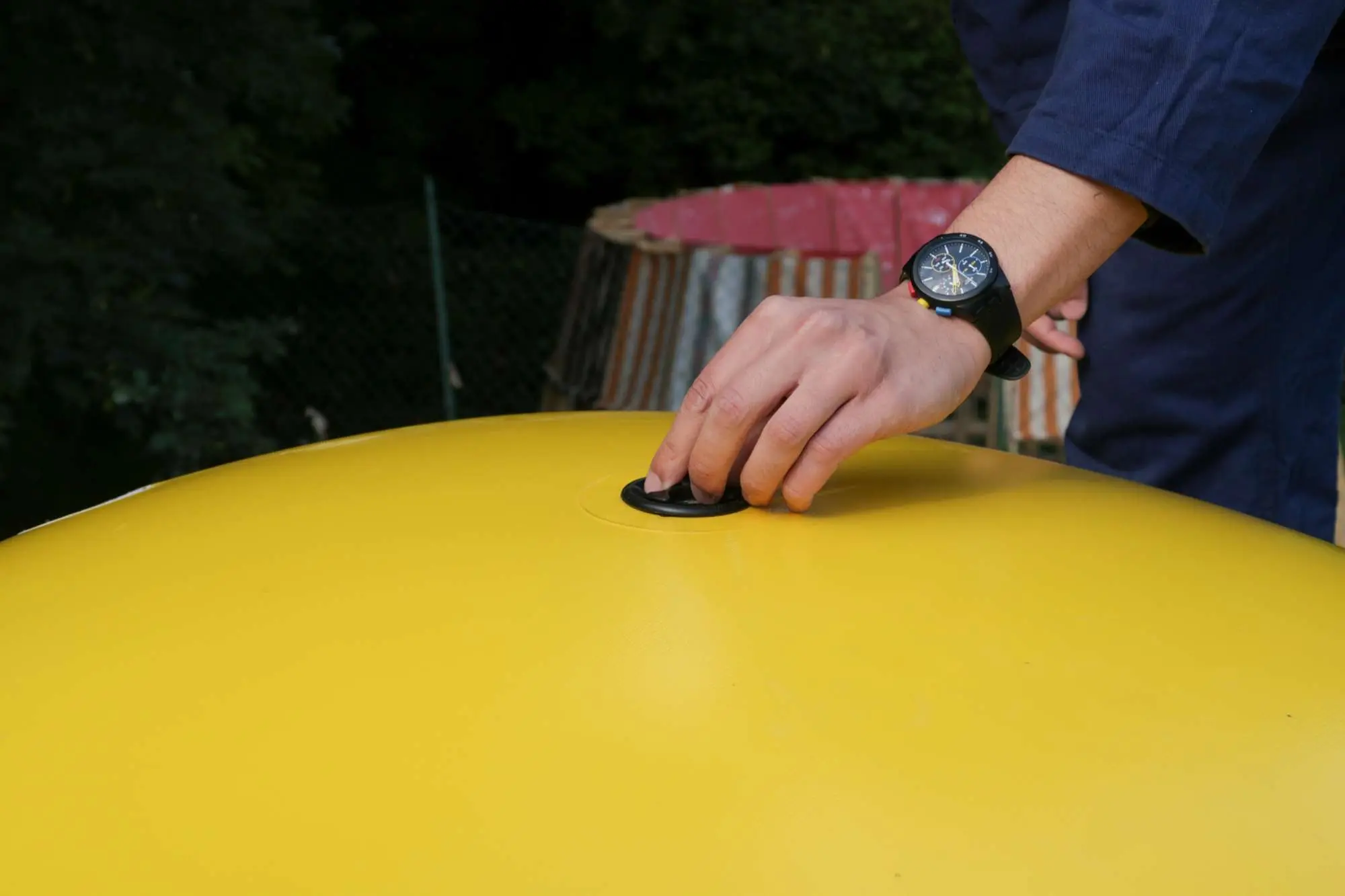
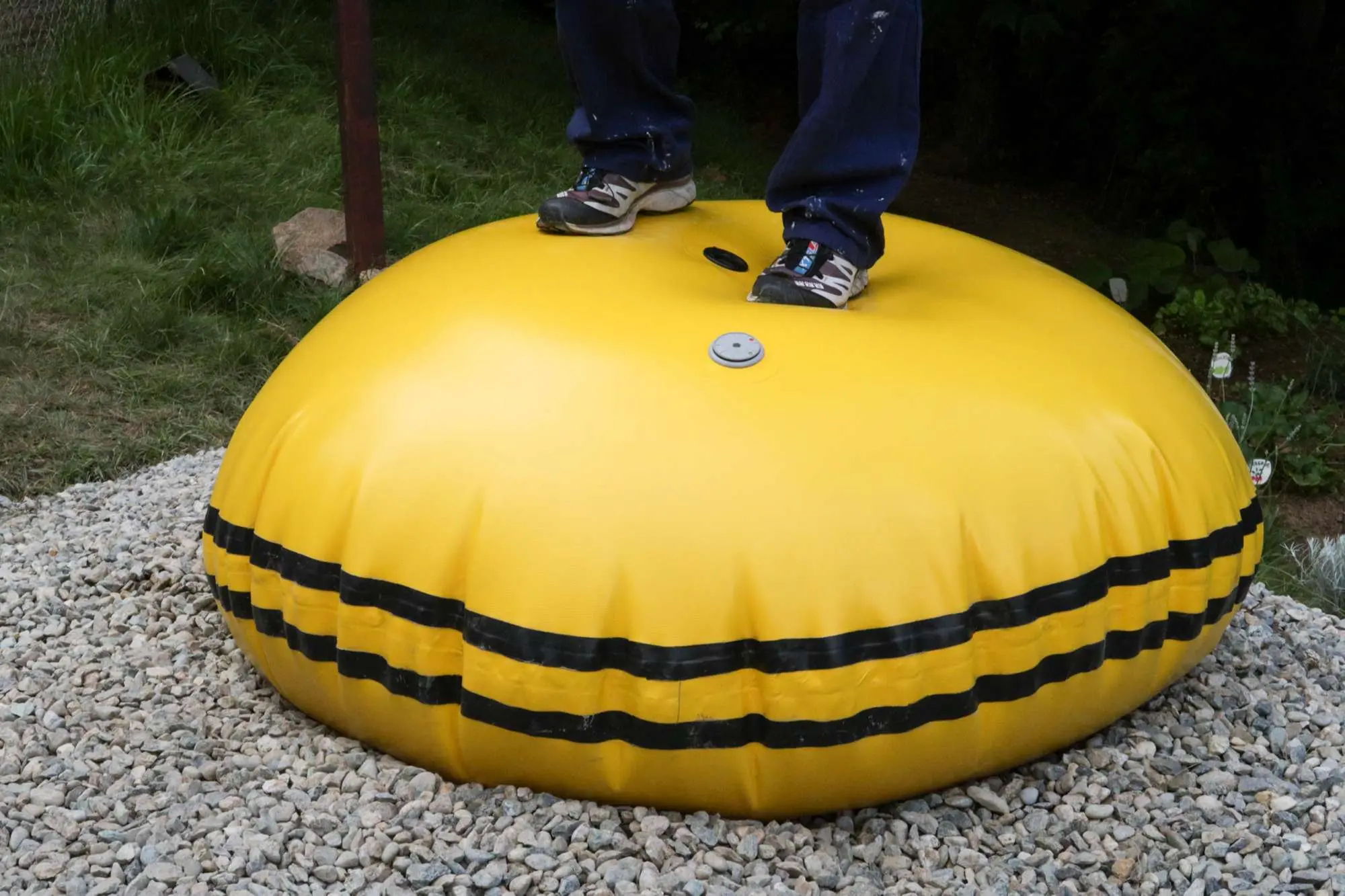
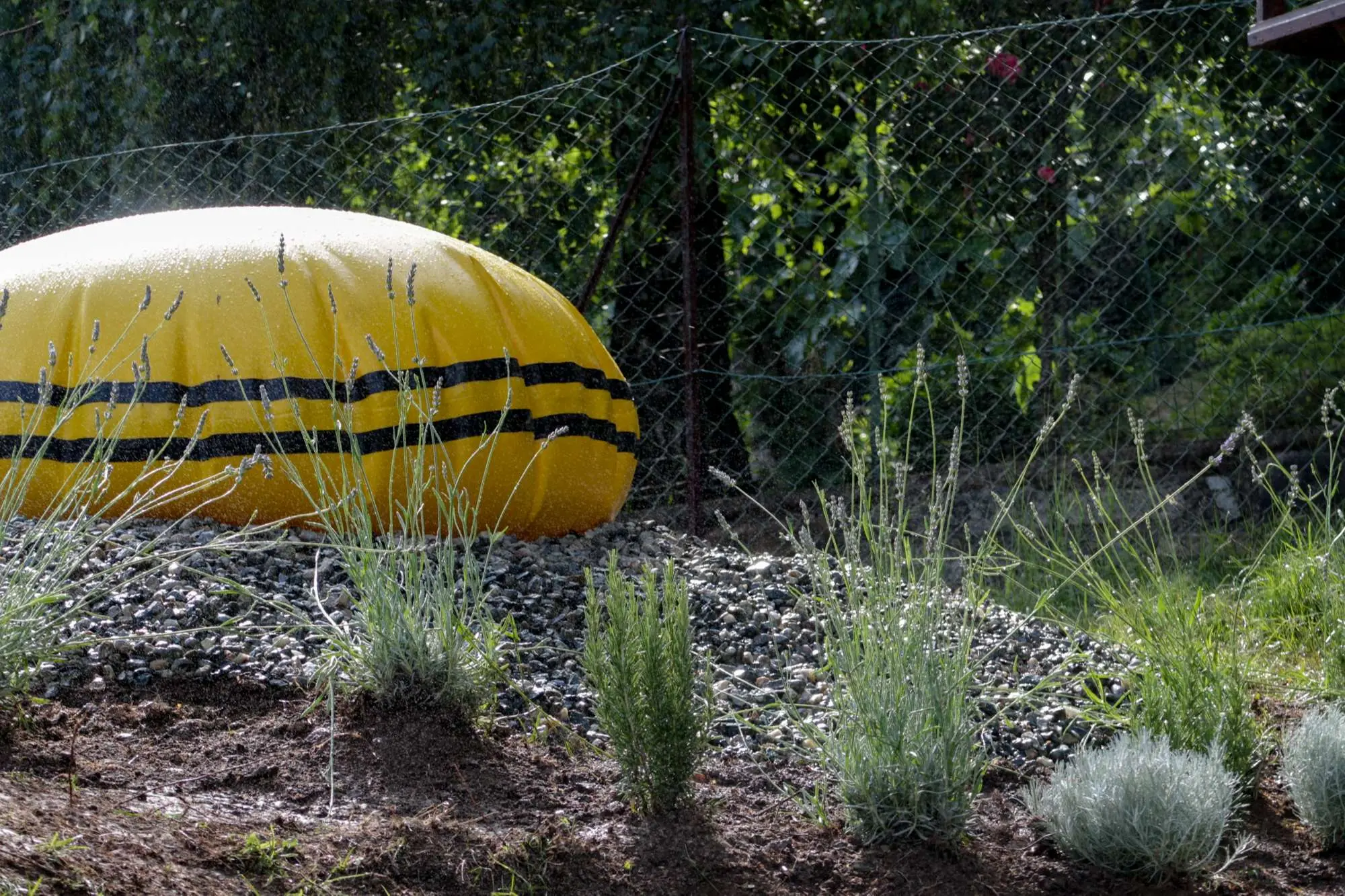
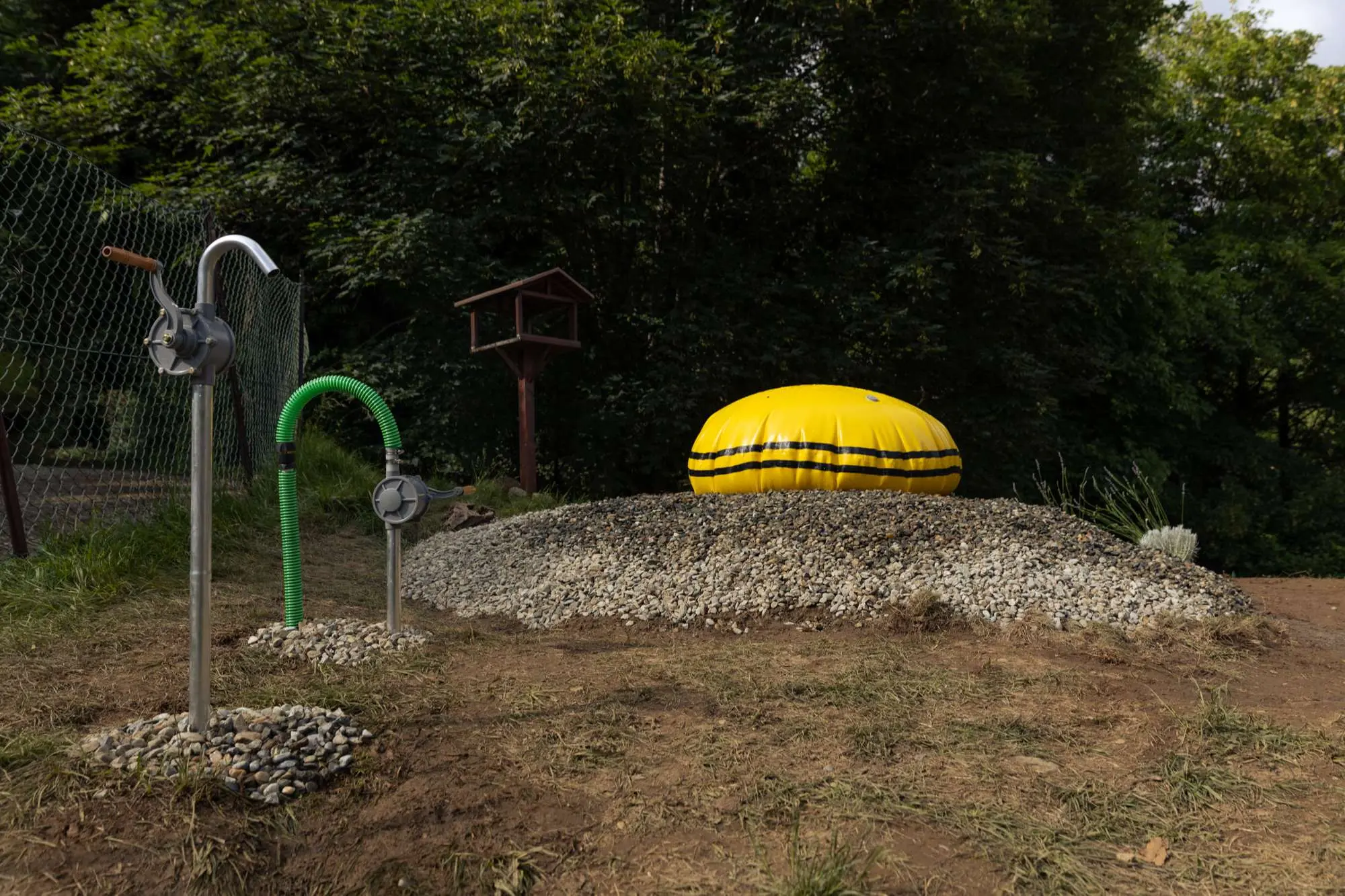
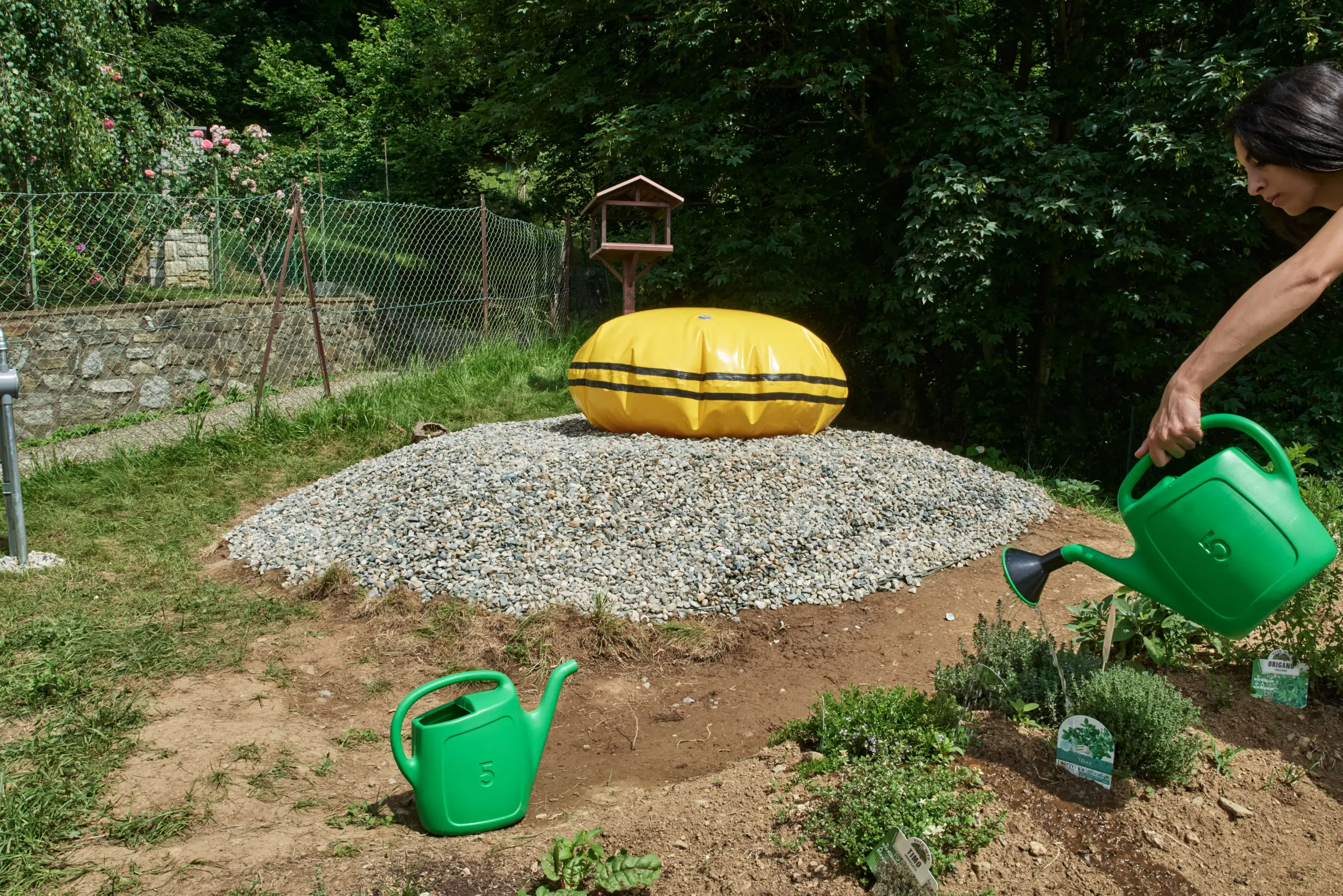
The favored element for this purpose was a water collection bladder made of elastic material with a circular footprint. A colored “balloon” with a diameter of about 150 cm, filled with rainwater was placed on top of the lot. The device, for the use of the community, in addition to serving as a symbolic totem, allows for a reading and monitoring of meteorological rhythms, due to its ability to show, in its inflating and deflating, the inflow and outflow of water. Thus providing, in this way, a special significance to the use of the water resource. Thus, it is a pneumatic architecture that lends itself well to its playful use, as the material's strength and elasticity allow the child to walk on it, lie on it, and use it as an element of play.
This device rests on a ground attachment consisting of natural elements, devoting, only to the reservoir, the image of an artificial element. Thus, a system was designed to collect and store water by draining it with gravel, which, drawing a circular footprint on the ground, serves as a base for the inflatable tank.
Filtered water is stored and redistributed through an underground system.
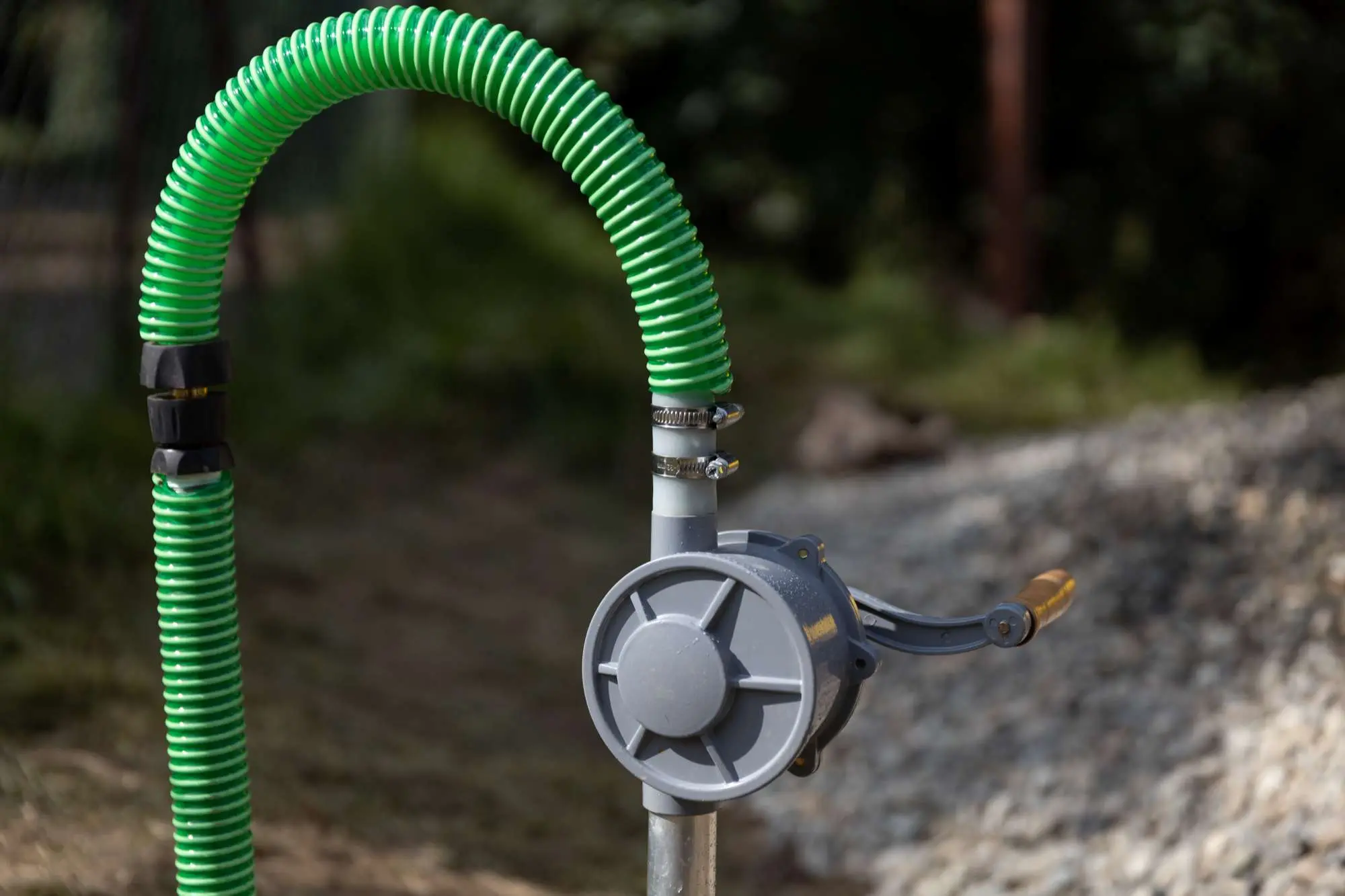
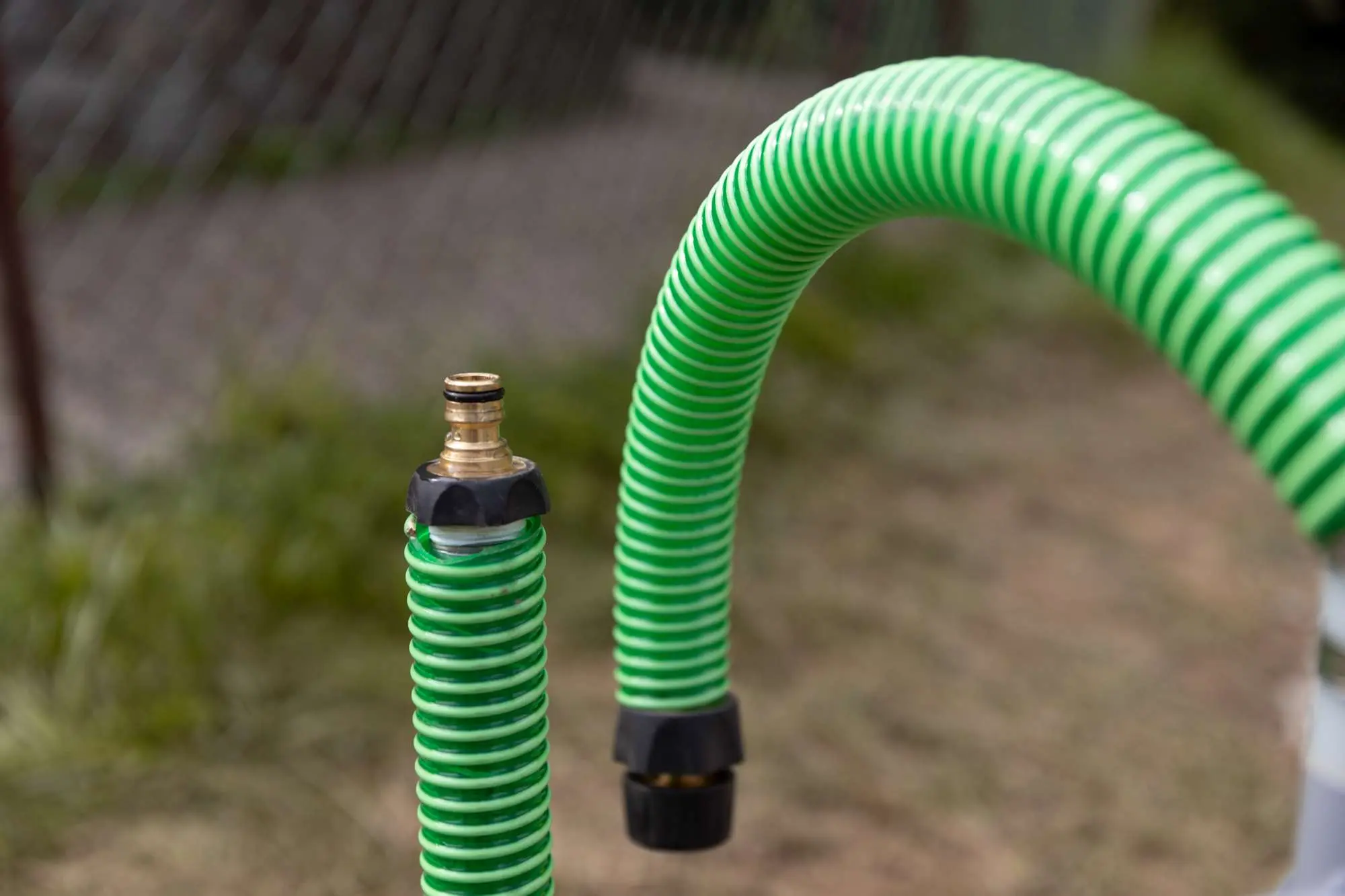
Two crank pumps provide access to the water without using electricity.
The Rain Circus received a special mention in the Premio Maggia 2022 competition.