Altre storie di libri e palazzi
Exhibition Design • Graphic
The exhibition ‘Altre Storie di Libri e Palazzi’ (Other Stories of Books and Palaces) tells the story of the Unife University Library System project of the same name. Plam Studio took care of the graphic identity of the entire exhibition project crowned by the exhibition inaugurated in June 2024.
The Project
‘Storie di libri e palazzi’ (Stories of books and buildings) is a project born in 2017 through the University Library System with the aim of highlighting the University of Ferrara's commitment to recovering and renovating the city's historical buildings, transforming them into university buildings. Creating new links between the territory, students and the local community.
Inside the buildings are the university libraries, making them containers of the books and knowledge that keep the university community alive. Composite and multiform realities are created, layered in different reading levels. Open archives in which ‘containers’ become ‘content’ and the link between books-libraries-palaces is strengthened. Environments that speak to us in silence, spaces that tell their story with a single glance, holding together the past and the future of the city of Ferrara.
It is in these places that we build our knowledge, ‘carve out’ a piece of knowledge and fix it in our minds as if we were leafing through one big book in which to immerse ourselves totally.


The Exhibition
Featuring historical images imbued with evocative power, the exhibition ‘Stories of Books and Palaces’ takes visitors on a journey through time and space: each palace reveals its history, each library unveils its secrets, and each book becomes a bridge between the past and the present.
The essence of this exhibition is captured at a single glance through a symbolic image and dynamic graphics that illustrate the project’s multi-layered development. The design of the courgette flower becomes the project’s spokesperson and the emblem of the exhibition. The graphic design creates a sense of ‘breaking through’, discovery and immersion by utilising the solid and empty spaces of simple geometric shapes combined with the historical image of the courgette flower. The seven ‘blocks’ represent the seven palaces with their characteristic Ferrara bricks and the seven libraries with the spines of their books, thus highlighting the link between books, libraries and palaces and drawing the visitor into a magnificent dimension straddling the past, present and future.
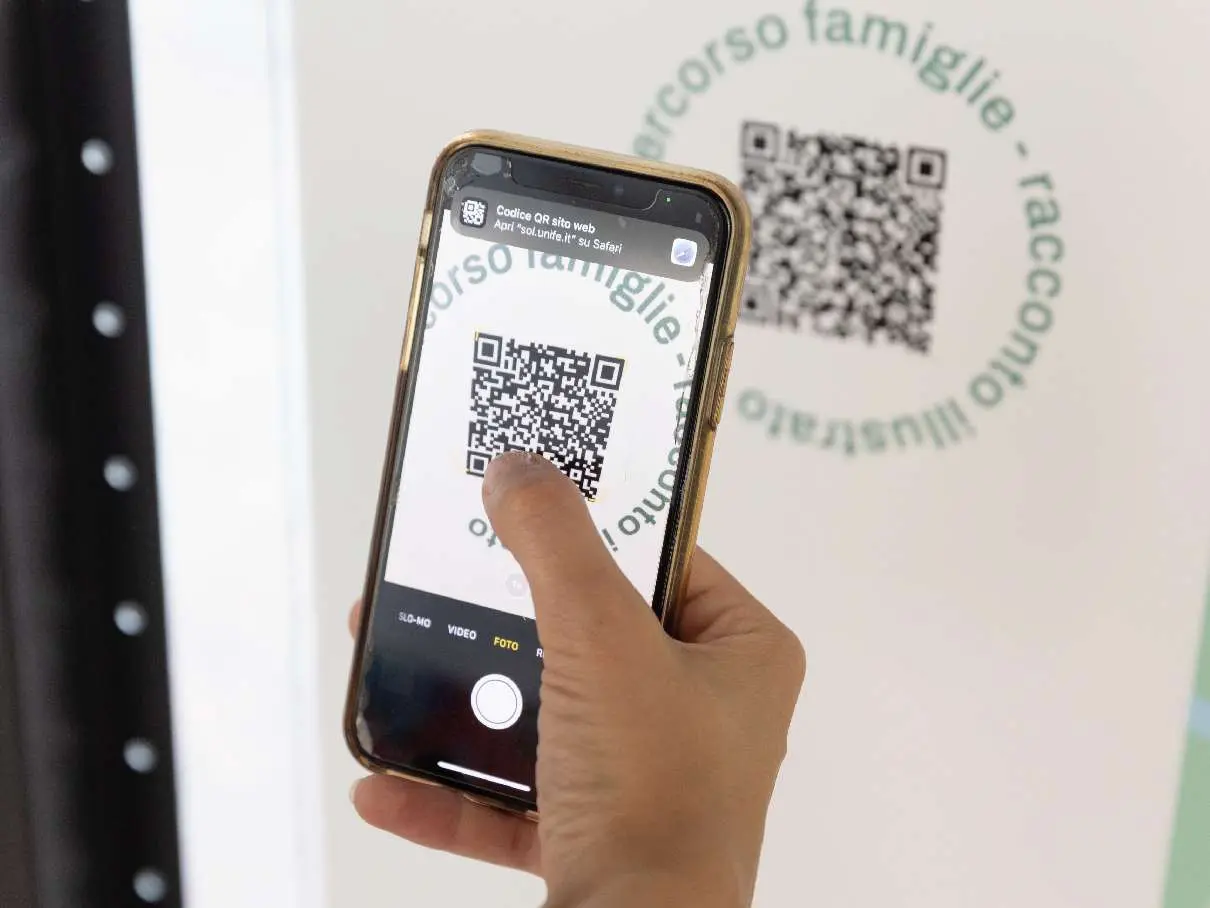
In the exhibition design, the panels are held in tension by metal structures, light, dividing the space and creating a suspended environment to explore and learn about. The information is arranged thematically and takes up the dimension of ‘archive’ in a search for the contents collected by the project during more than seven years of activity.
Through visual and interactive games, the themes of unveiling, browsing and building are taken up again, understood as discovery and advancement, growth towards the future.
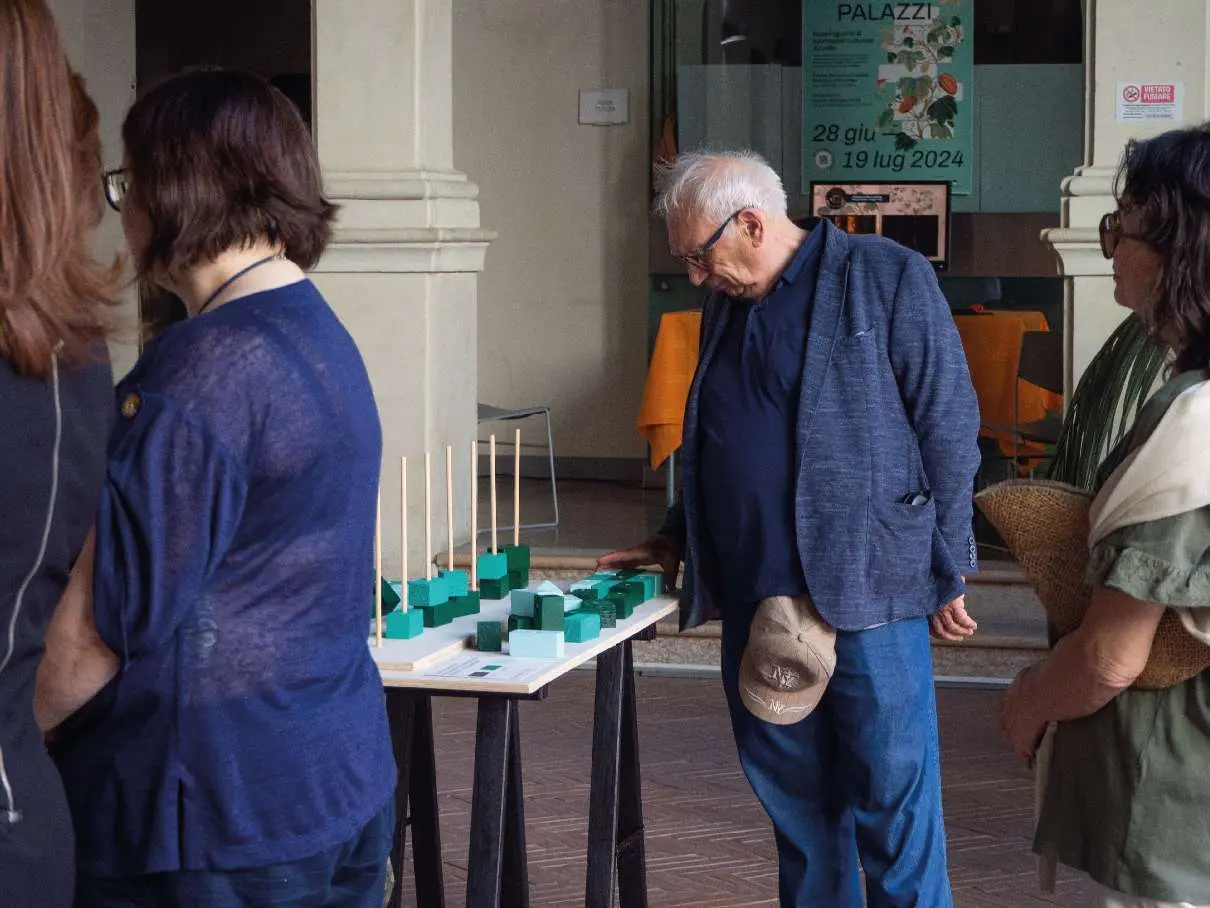
At the end of the exhibition, a ‘feedback mechanism’ is set up. This is an interactive wooden structure where, using simple building blocks, visitors to the exhibition can leave their opinions, helping to collectively ‘build’ the future of the project. The feedback collected echoes the graphic design and, by extension, the concepts embodied in the project.